





Ross
In March 2024, my younger brother, Ross passed away at the age of 24. I was 28. He fell asleep on a Friday night and did not wake up on the Saturday morning.
In the immediate aftermath, we weren’t sure what had caused his death. The paramedics told us that given his history of epilepsy it was the likely cause, but they couldn’t say for certain.

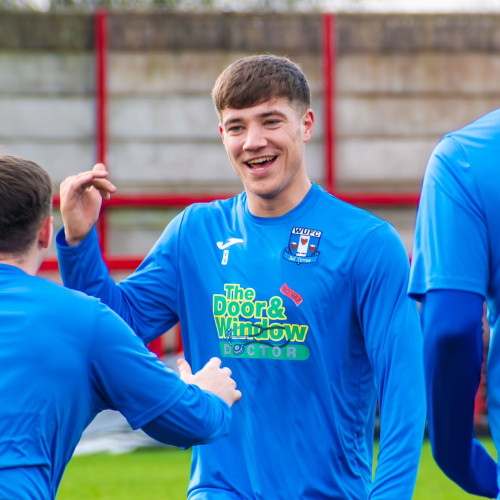
We never imagined that epilepsy could lead to his passing, but it seemed the only plausible explanation.
Ross was very fit and active. He played football at semi‑professional level, as well as several other sports. He regularly attended the gym, maintained a healthy lifestyle, and was the least stressed person I’ve ever met.
He had his first seizure when he was around 16 whilst on holiday with my mum and dad. When they got back, they took him to the hospital for assessment and we awaited the results.
One night, not long after they had returned from holiday, I was lying in bed and heard a repeated banging. I couldn’t make out what it was at first. As I listened closer, I realised it was coming from the loft above me; from Ross’s room. My mum and dad were away for the night, so I shouted my older brother, Joel, as I rushed up the stairs. When I burst through Ross’s bedroom door, I found him on the floor having a seizure.
It was the first time I had witnessed Ross, or anyone, having a seizure. Ross had tonic‑clonic seizures, where his muscles would stiffen and jerk rapidly. He wasn’t conscious of what was happening for the few minutes they occurred. It is a frightening sight. It is little wonder why archaic cultures believed seizures were a sign that a person was possessed.
We called 999 and by the time the paramedics arrived, Ross was regaining consciousness. They waited for him to come round, checked him over, and left without taking him with them.
I returned to my room and Googled, “What are the chances of dying from a seizure?” I don’t remember exactly what I read, but I do remember the data reassuring me.
A little while after that, I watched the film Snowden, where the main character Edward Snowden (played by Joseph Gordon‑Levitt) suffers with epilepsy and his seizures are shown on screen. Again, this provided reassurance. He held a high‑functioning role in the CIA despite his epilepsy. It reflected how epilepsy and seizures were often portrayed in media and culture – as manageable, routine, and simply something people live with.
Eventually Ross’s results came back, and the doctor confirmed that he had epilepsy. For my parents, the diagnosis was somewhat of a relief, given the possible alternatives that might have been causing his seizures. The doctor also explained that the random dizzy spells Ross had experienced since around the age of 13 were also likely to be epilepsy‑related. He was prescribed medication to manage his seizures.
For the most part, the medication worked. Over the next eight years, Ross still had seizures, but they were infrequent. Ross, Joel, and I ended up living together without our mum and dad. When Ross had a seizure, as my bedroom was directly below his, I would typically wake up first and shout Joel. After witnessing his first one, we didn’t call the paramedics as a matter of routine. It was still an unpleasant sight, but we became accustomed to them, and we’d sit with him until he regained full consciousness. I always told myself that they looked much worse than the risk they posed.
My main concern was often Ross’s untidiness. He had a habit of leaving empty glasses on the floor next to his bed (or anywhere he went). When I saw them, I’d tell him, “If you have a seizure and fall onto that, you’re going to cut your face open.”
Overall, epilepsy had very little impact on Ross’s life. His medication made him drowsy at times, and we responded to his seizures when they happened – that was the extent of its impact. And it didn’t stop him from doing anything during his life.
Ross’s passing made local newspapers and even national news, where his history of epilepsy was referenced. A comment I read on one of the articles mentioned the potential for his death to be SUDEP – and that more attention should be given to the issue.
It was the first time I had ever heard the acronym SUDEP. My parents, who attended doctors’ appointments and meetings with Ross, had not heard of SUDEP either. My mum remembers early conversations where doctors covered the risks associated with not taking medication, but there hadn’t been a conversation where SUDEP was explicitly discussed.
As I researched SUDEP, it seemed the most likely cause of Ross’s death. It was also during this period that I first came across SUDEP Action. It was their website where I found much of my information about SUDEP.
Despite the indications that SUDEP had caused Ross’s death, I didn’t contact the charity at this stage, as I didn’t want to jump to conclusions until the postmortem was over.
I consider myself relatively conscientious – the fact that there was a risk associated with epilepsy that I didn’t know about was unsettling. And it carried some guilt.
But, of course, I wasn’t a doctor – and perhaps I was putting too much responsibility on myself.
And it wasn’t our lack of awareness of SUDEP that led us not to take Ross’s epilepsy seriously – we absolutely did. My mum and dad always ensured he consistently took his medication. If he had two seizures close together, they would arrange a meeting with the doctor to discuss a potential change in his medication. Ross took it seriously too and would always take his medication.
I assumed this is how we would manage Ross’s epilepsy until the end of his natural life, unless he grew out of it or a new breakthrough drug cured it.
Four months after Ross’s passing, we finally received the coroner’s report, and it confirmed, as suspected, that the cause of Ross’s death was SUDEP.
I reached out to SUDEP Action for the first time, sending the following email:
“Hello, my younger brother passed away on 30th March 2024. We have recently received the coroner’s report which confirmed his cause of death as SUDEP. I am just reaching out for some potential support but mainly to ask some questions that you may have some answers to. Thanks very much in advance, Luke.”
Over the weeks and months that followed, I had several calls with Vicky, where she provided general bereavement support and invaluable guidance through the many questions running through my mind about SUDEP.
After several calls with Vicky, I eventually found the courage to ask a question that had been playing on my mind, but I was scared to know the answer.
“If I had found out about SUDEP two weeks before Ross died, and I had called you, worried, asking what I should do to help, would you have told me to do anything different?” I asked her.
“No, I wouldn’t have,” she replied.
Vicky explained that given Ross’s infrequent seizures, healthy lifestyle, and consistent medication use, he was doing everything he could to manage his epilepsy and minimise the risk of SUDEP.
This offered some sense of relief. It meant there was no wrestling with the idea that there was more we or Ross could have done, even though we hadn’t known about SUDEP.
Yet not all families are given this reassurance. Some families face an added layer of complexity in their grief when a SUDEP death is considered ‘avoidable’.
But even the comfort of knowing Ross was, without any awareness of SUDEP, still doing everything possible to prevent it, doesn’t completely remove all the “what if?” questions. What if extra funding had led to improved medication that further reduced the risk of SUDEP? Or what if more in‑depth research had led to a breakthrough where SUDEP was better understood – to the point where it was entirely eliminated as a risk? Those questions still linger.
There’s still a great deal about SUDEP that remains unknown. What is clear, however, is that it disproportionately affects young adults. Ross was only just getting started in life when SUDEP tragically brought an end to it.
Through the work SUDEP Action is doing, hopefully communication about the risks of SUDEP increases, reducing the number of avoidable SUDEP deaths. And eventually, increased funding and research will lead to a breakthrough where the risk of SUDEP vanishes entirely.
As a family, with the huge help of Ross’s friends, we do what we can to support SUDEP Action. We host an annual football match and golf competition in Ross’s honour, and people raise money through runs of all distances – from 10Ks to full marathons – charity nights, and much more.
Ross was never one for fuss, but he was kind and caring, and I’ve no doubt he would be glad to know that his memory is being used in such a positive and meaningful way – even if it does mean he’s spoken about a lot.
Luke, Ross’s brother


